
September 25, 2025
How To Become An Esthetician in Michigan
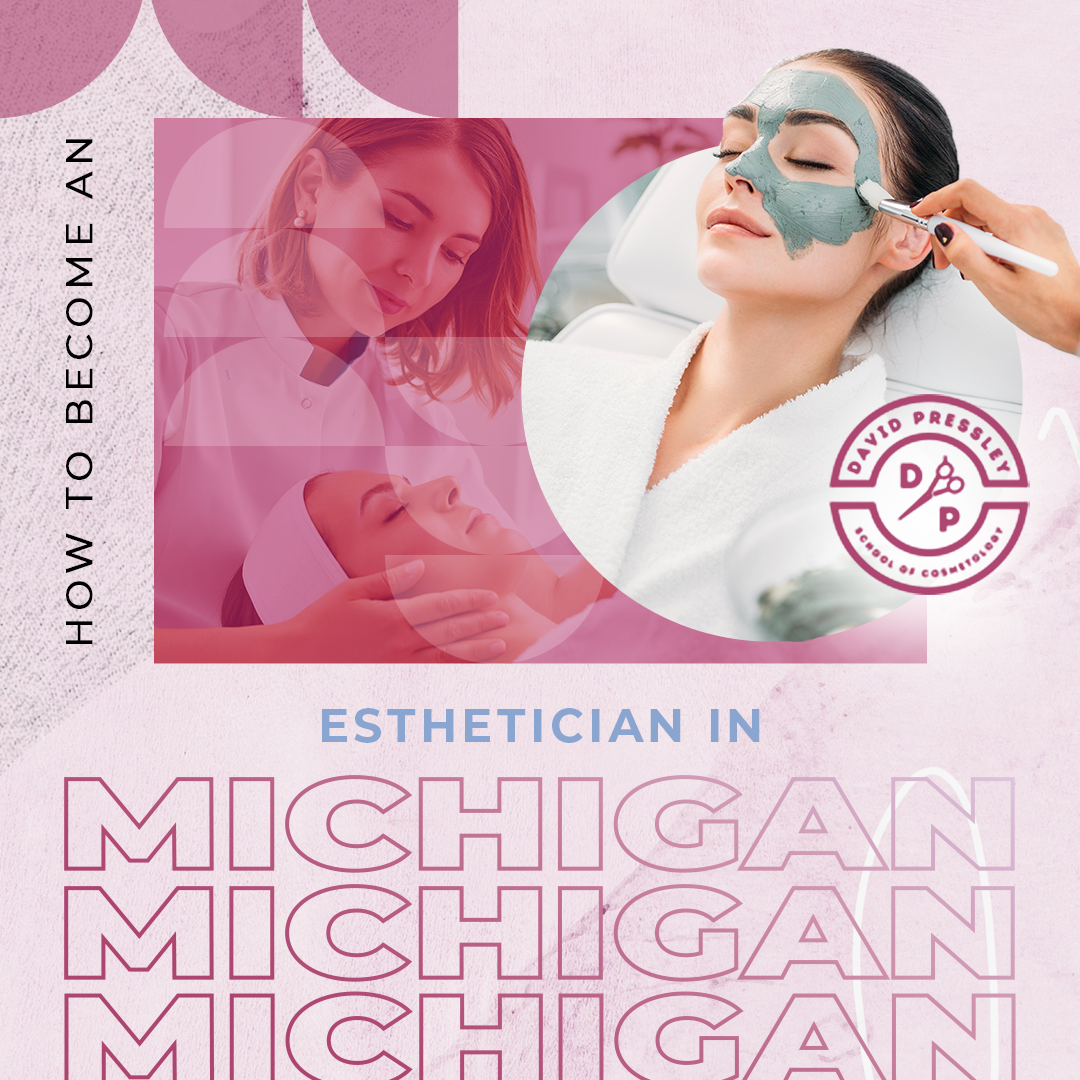
To become an esthetician in Michigan, you complete a 750-hour state-approved esthetics program, apply for your license through the state (LARA), and sit for the written and practical exams. At David Pressley School of Cosmetology, that path runs through a hands-on esthetics program on two Michigan campuses, Royal Oak and Taylor, where you learn skin analysis, facials, hair removal, and makeup by working with real guests under licensed instructors, and where full-time day students can finish in as little as about six months. This guide walks through each step, what you study along the way, and how David Pressley helps you get there.
What does an esthetician do?
An esthetician is a licensed skincare professional. Day to day, that means performing facials and skin treatments, hair removal such as waxing, makeup application, and treatments that target concerns like acne, dryness, or uneven tone, then teaching clients how to care for their skin at home. The work is equal parts artistry and applied science: you are reading each person’s skin, choosing the right service, and doing it safely.
Because it is a licensed role, you cannot simply start offering these services. Michigan requires formal training and a state license first, which is where a program like the one at David Pressley School of Cosmetology comes in. The steps below lay out exactly how that works.
What are the requirements to become an esthetician in Michigan?
Before you enroll, Michigan asks for a few basics. These are set by the state, not the school, so they apply wherever you train:
- Age: you must be at least 17 years old.
- Education: you need to have completed the 9th grade or the equivalent.
- Good moral character: a standard requirement tied to state licensing.
If you meet those, the next step is choosing a state-approved program, which is where most of your time and effort will go.
How do you become an esthetician in Michigan, step by step?
Here is the full path from interested beginner to licensed esthetician, with what happens at each stage.
- Meet the basic requirements. Confirm you are at least 17 with a 9th-grade education. If you have questions about whether you qualify, the David Pressley admissions team can walk you through it before you apply.
- Enroll in a state-approved esthetics program. Michigan requires 750 hours of training from an approved school. At David Pressley, those hours blend classroom instruction with hands-on practice on real guests in the student salon, so you are not just studying skincare, you are doing it. Day and evening schedules are available, and full-time day students can complete the program in as little as about six months.
- Complete your 750 hours and graduate. Because the program is hour-based, steady attendance is what moves you toward graduation. Your instructors track your progress and your practical skill as you go, so you finish ready for both the exam and the treatment room.
- Apply for your license through LARA. Submit your application to the Michigan Department of Licensing and Regulatory Affairs (LARA) with proof of your education and the required fees, then receive authorization to test.
- Sit for the written and practical state exams. The written exam covers anatomy, sanitation, skin analysis, chemistry, and state regulations. The practical exam asks you to demonstrate hands-on services. The hours you spent working with real guests at David Pressley are exactly the kind of preparation that makes the practical feel familiar.
- Get licensed and begin working. Once you pass and your license is issued, you can start offering services as a licensed esthetician. Michigan does not require continuing education to keep your license active, though many estheticians keep learning advanced techniques as they grow.
What will you learn in esthetics school?
Those 750 hours are built to give you a real foundation in the science and the artistry of skincare. At David Pressley, your esthetics training covers a broad set of skills so you graduate ready for the range of work the license allows:
- Skincare fundamentals: facials, cleansing, exfoliation, hydration, skin analysis, and building a treatment plan for each client.
- Hair removal: facial and body waxing done safely and sanitarily.
- Makeup application: everyday and special-occasion looks, color theory, and enhancing natural features.
- Skin science and anatomy: the structure and function of skin, common conditions, and knowing when a service is not appropriate.
- Health, safety, and sanitation: infection control, disinfection, and the safe use of tools and equipment.
- Professional skills: client consultations, building trust and retention, and running a clean, professional workspace.
You practice all of this on real guests in the student salon, under the supervision of licensed instructors, which is the difference between knowing the material and being ready to work. All services provided by students under the supervision of licensed professionals.
How long does it take, and can you work while in school?
For most full-time day students, the 750-hour program can be completed in as little as about six months, or roughly 25 weeks. That is a fast path compared with a traditional degree.
If you are working or have other commitments, David Pressley also offers evening scheduling. Evening students take a little longer to finish, but the flexibility lets you keep earning while you train. The admissions team can help you map out a schedule that fits your life.
Where can a licensed esthetician work in Michigan?
One of the appeals of this license is how many directions it can take you. Licensed estheticians can be found in:
- Day spas and salons
- Medical spas and dermatology or plastic surgery offices
- Resorts, hotels, and cruise ships
- Makeup artistry and beauty retail
- Film, fashion, and events
- Their own independent skincare practice
Whether you want the structure of an established spa or the independence of building your own client base, the license gives you room to shape the work around your interests.
Why train at David Pressley School of Cosmetology?
When you are choosing where to spend those 750 hours, the experience you get for that time matters as much as the license at the end. A few things set the David Pressley esthetics education apart:
- Two Michigan campuses: train at Royal Oak or Taylor, whichever is closer to home.
- Real hands-on training: you work with real guests in the student salon, not just mannequins, so you build genuine client confidence.
- Flexible scheduling: day and evening options make it easier to balance school with the rest of your life.
- Room to grow: the school also offers cosmetology and instructor programs, so you can keep advancing your education after you finish esthetics.
- Support with cost: the admissions team can walk you through your options, and Financial Aid is available to those who qualify.
Next step: Ready to start your skincare education? Connect with David Pressley admissions to learn about the esthetics program, tour a campus, and map out a schedule that fits your life. Financial Aid is available to those who qualify.
Frequently asked questions
What are the requirements to become an esthetician in Michigan?
You must be at least 17, have a 9th-grade education, complete a 750-hour state-approved esthetics program, apply for your license through LARA, and sit for the written and practical exams.
How long does it take to become an esthetician in Michigan?
The required 750 hours can be completed in as little as about six months of full-time day study. Evening schedules take longer but let you keep working while you train.
How much does esthetics school cost?
Costs vary by school and schedule. At David Pressley, the admissions team can walk you through tuition and your options, and Financial Aid is available to those who qualify.
Is esthetics a license or a certification in Michigan?
Esthetics results in a state license in Michigan, issued after you complete an approved program and sit for the state exam.
Do Michigan estheticians need continuing education?
No. Michigan does not require continuing education to renew an esthetician license, though many estheticians keep learning advanced techniques as they grow.